Brass CNC turned parts are precision components manufactured from brass bar stock using CNC turning machines. These parts are widely used in industries that require excellent dimensional accuracy, corrosion resistance, electrical conductivity, and long service life. Thanks to modern CNC technology, manufacturers can produce custom brass CNC turned parts with tight tolerances and consistent quality, making them an ideal choice for industrial equipment, electronics, automotive systems, plumbing, and many other applications.
Whether you need a simple brass spacer or a highly complex connector with multiple machining operations, CNC turned brass parts offer reliable performance and cost-effective production for both small and large-volume orders.
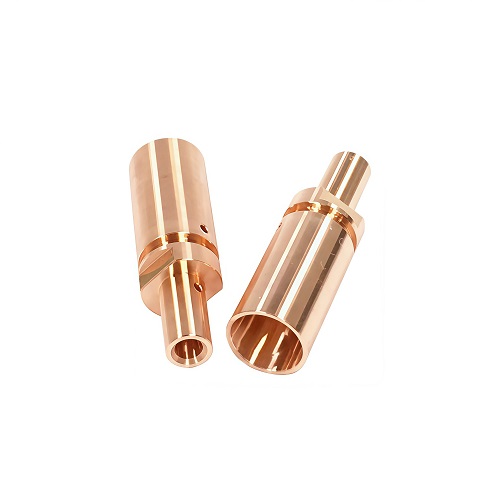
What Are Brass CNC Turned Parts?
Brass CNC turned parts are metal components produced through CNC (Computer Numerical Control) turning. During the machining process, a brass rod rotates at high speed while cutting tools remove material to create the desired shape.
Unlike traditional manual machining, cnc turning uses computer-controlled programs to ensure exceptional precision and repeatability. This allows manufacturers to produce thousands of identical parts while maintaining strict dimensional tolerances.
Typical precision brass CNC turned parts include:
For businesses seeking reliable production, working with an experienced brass CNC turned parts manufacturer ensures every component meets project specifications.
Why Is Brass an Excellent Material for CNC Turning?
Brass has been one of the most popular materials for CNC machining because it combines excellent mechanical properties with outstanding machinability.
Excellent Machinability
Brass is easier to machine than many other metals. It produces smooth chips, reduces tool wear, and enables faster machining speeds. As a result, custom brass CNC turned parts can often be manufactured more efficiently than components made from stainless steel or titanium.
Corrosion Resistance
Many brass alloys naturally resist moisture, chemicals, and oxidation. This makes brass ideal for products exposed to humid or outdoor environments.
High Electrical Conductivity
Brass is widely used in electrical connectors, terminals, switches, and communication equipment due to its excellent conductivity.
Attractive Surface Finish
Brass parts naturally have a bright golden appearance. They can also be polished, nickel plated, chrome plated, or coated to improve durability and aesthetics.
Long Service Life
Because of its strength and wear resistance, brass performs well in demanding industrial environments while requiring minimal maintenance.
How Are Brass CNC Turned Parts Manufactured?
The production of brass CNC turned parts involves several carefully controlled steps.
Material Selection
The process begins with selecting the appropriate brass alloy. Common grades include C360, C377, C260, and lead-free brass for environmentally regulated markets.
CNC Programming
Engineers convert CAD drawings into CNC machining programs that define every cutting path, spindle speed, and machining operation.
CNC Turning
The brass bar is mounted inside a CNC lathe. As the material rotates, precision cutting tools shape the outside diameter, drill holes, create grooves, cut threads, and form complex profiles.
Secondary Machining
Some precision brass turned components require additional operations such as:
Milling
Cross drilling
Tapping
Knurling
Engraving
These processes can often be completed using CNC turning centers with live tooling.
Surface Treatment
Depending on customer requirements, parts may receive:
Nickel plating
Chrome plating
Zinc plating
Polishing
Sandblasting
Passivation
Custom coatings
Quality Inspection
Every batch undergoes dimensional inspection using precision measuring equipment to verify tolerance, concentricity, surface roughness, and thread accuracy.
Common Applications of Brass CNC Turned Parts
Because brass offers an excellent balance of strength and machinability, it is widely used across many industries.
Industrial Equipment
Industrial machinery relies on precision brass CNC turned parts for connectors, adapters, bushings, valves, and fluid control systems.
Electrical Industry
Brass provides stable electrical conductivity, making it ideal for:
Electrical terminals
Power connectors
Switch components
Fuse holders
Grounding parts
Automotive Industry
Automotive manufacturers use brass turned components in fuel systems, sensors, electrical connectors, hydraulic systems, and brake assemblies.
Plumbing Systems
Brass is highly resistant to corrosion caused by water, making it suitable for:
Pipe fittings
Valve bodies
Couplings
Water control components
Medical Equipment
High-precision brass components are commonly found in diagnostic instruments, laboratory equipment, and medical devices requiring consistent dimensional accuracy.
Advantages of Custom Brass CNC Turned Parts
Many companies prefer OEM brass CNC turned parts because custom machining provides significant design flexibility.
Key advantages include:
Tight machining tolerances
Excellent dimensional consistency
Fast production cycles
Flexible batch sizes
Complex geometries
High repeatability
Reduced assembly costs
Reliable product performance
Whether you require prototypes or mass production, CNC turning allows manufacturers to meet exact engineering requirements.
Although both processes use CNC technology, they serve different purposes.
CNC Turning
CNC Milling
Better for flat surfaces
Suitable for complex pockets
Handles irregular geometries
More versatile for non-round components
Many products combine both processes to achieve the required functionality.
How to Choose a Brass CNC Turned Parts Manufacturer
Selecting the right manufacturing partner is essential for product quality and delivery reliability.
Consider the following factors:
Manufacturing Experience
Look for a brass CNC turned parts manufacturer with extensive experience producing precision industrial components across multiple industries.
Advanced Equipment
Modern CNC lathes, Swiss-type turning centers, and automated inspection equipment improve production efficiency and consistency.
Quality Management
Manufacturers should implement strict quality control procedures throughout material inspection, machining, and final testing.
Customization Capability
Every project has unique requirements. A reliable supplier should provide complete OEM and custom machining services based on customer drawings or samples.
Material Expertise
Professional suppliers understand the machining characteristics of different brass grades and can recommend the most suitable material for each application.
Stable Production Capacity
Whether your order is for a few hundred pieces or hundreds of thousands, production capacity should remain consistent without compromising quality.
Future Trends in Brass CNC Turning
The CNC machining industry continues to evolve with new technologies.
Future developments include:
Intelligent CNC automation
Robotic loading systems
AI-assisted process optimization
Digital quality inspection
Higher machining precision
Sustainable manufacturing practices
Faster prototype development
Greater customization capabilities
These innovations allow manufacturers to deliver higher-quality custom brass CNC turned parts while reducing production costs and lead times.
Conclusion
Brass CNC turned parts play an essential role in modern manufacturing. Their excellent machinability, corrosion resistance, electrical conductivity, and dimensional accuracy make them suitable for a wide range of industrial applications.
Whether used in industrial equipment, electrical systems, automotive components, or plumbing products, precision brass CNC turned parts provide reliable performance and long service life. By partnering with an experienced brass CNC turned parts supplier offering advanced CNC machining capabilities and strict quality control, businesses can obtain high-quality custom components that meet demanding engineering requirements while improving overall production efficiency.
FAQ
What are brass CNC turned parts used for?
They are commonly used in industrial machinery, electrical connectors, plumbing systems, automotive components, instrumentation, and precision equipment.
Why is brass suitable for CNC turning?
Brass offers excellent machinability, corrosion resistance, electrical conductivity, and dimensional stability, making it one of the easiest and most efficient metals to machine.
Can brass CNC turned parts be customized?
Yes. Most manufacturers provide custom brass CNC turned parts based on customer drawings, CAD files, or samples, including different sizes, threads, finishes, and tolerances.
What tolerances can CNC turning achieve?
Depending on the equipment and design, precision CNC turning can commonly achieve tolerances of ±0.01 mm or even tighter for critical features.
How do I choose a reliable brass CNC turned parts supplier?
Look for a supplier with advanced CNC equipment, experienced engineers, comprehensive quality control, flexible customization capabilities, stable production capacity, and proven experience in serving industrial equipment manufacturers.