How to Choose the Right Brass CNC Turned Parts for Your Application
Selecting the right brass CNC turned parts is essential for ensuring product performance, reliability, and cost efficiency. Whether you're developing industrial equipment, electrical devices, plumbing systems, or automation machinery, choosing the correct material, machining specifications, and manufacturing partner can significantly impact the success of your project.
Brass is one of the most popular materials for precision machining because of its excellent machinability, corrosion resistance, electrical conductivity, and attractive surface finish. However, not all custom brass CNC turned parts are the same. Factors such as brass grade, tolerance, surface treatment, and production capability should all be carefully evaluated before placing an order.
This guide explains the key considerations when selecting precision brass CNC turned parts and how to work with a reliable manufacturing partner.
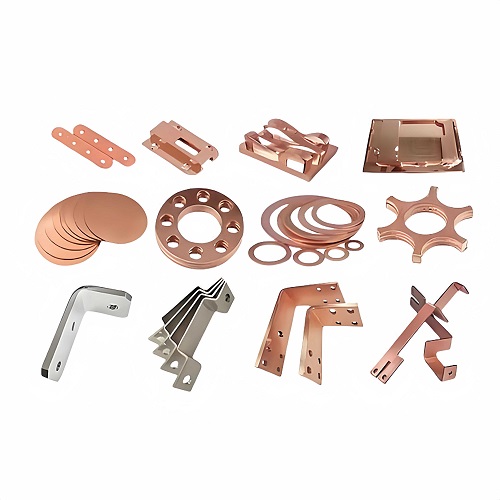
Why Brass CNC Turned Parts Are Widely Used
Brass combines outstanding mechanical properties with easy machinability, making it an ideal material for CNC turning. Compared with many other metals, brass allows faster machining speeds, reduced tool wear, and excellent dimensional consistency.
Today, CNC turned brass parts are commonly found in:
Because cnc turning delivers exceptional repeatability, manufacturers can produce identical parts in both small prototype runs and high-volume production.
1. Understand Your Application Requirements
Before selecting brass CNC turned parts, clearly define where and how the component will be used.
Consider the following questions:
Will the part carry mechanical loads?
Will it be exposed to water or chemicals?
Does it require high electrical conductivity?
Is corrosion resistance important?
Does the component require tight dimensional tolerances?
For example, electrical connectors require excellent conductivity, while industrial valve components demand high durability and corrosion resistance. Understanding the operating environment helps determine the most suitable material and machining process.
2. Choose the Right Brass Material Grade
Different brass alloys offer different mechanical properties.
Common grades include:
C360 Free-Cutting Brass
One of the most widely used materials for precision brass CNC turned parts due to its excellent machinability, smooth surface finish, and cost-effective production.
Suitable for:
Precision fittings
Bushings
Connectors
Threaded components
C260 Cartridge Brass
Provides higher ductility and strength while maintaining good corrosion resistance.
Often used for:
Electrical terminals
Decorative hardware
Mechanical components
Lead-Free Brass
Required in applications involving drinking water systems, food processing, or regions with strict environmental regulations.
Choosing the proper material grade improves both product performance and long-term reliability.
3. Specify Dimensional Tolerances
Tolerance directly affects assembly accuracy and product quality.
For high-precision applications, manufacturers can typically achieve tolerances of ±0.01 mm or better, depending on the design and machining requirements.
When requesting custom brass CNC turned parts, clearly specify:
Diameter tolerance
Length tolerance
Concentricity
Roundness
Thread accuracy
Surface roughness
Avoid specifying unnecessarily tight tolerances, as they may increase machining time and production costs without adding value.
4. Consider Surface Finish Requirements
Surface treatment improves both appearance and functionality.
Common finishing options include:
Polishing
Creates a smooth and attractive surface while reducing friction.
Nickel Plating
Improves corrosion resistance and wear performance.
Chrome Plating
Provides enhanced durability and a decorative appearance.
Zinc Plating
Offers economical corrosion protection.
Custom Coatings
Some industrial applications require specialized coatings for improved chemical resistance or electrical insulation.
Discuss finishing requirements with your brass CNC turned parts manufacturer early in the design stage.
5. Evaluate Part Complexity
Simple cylindrical components are generally easier and less expensive to manufacture than complex multi-feature parts.
Features that influence machining difficulty include:
Deep holes
Internal threads
Cross holes
Knurling
Grooves
Multiple diameters
Precision chamfers
Modern cnc turning centers with live tooling can complete multiple operations in a single setup, improving both efficiency and consistency.
6. Verify Manufacturing Capabilities
Not every supplier has the same machining capacity.
A professional brass CNC turned parts supplier should provide:
Advanced CNC turning centers
Multi-axis machining capability
Automated production lines
Precision inspection equipment
Experienced engineering support
Flexible production capacity
Working with an experienced manufacturer helps reduce production risks and ensures consistent product quality.
7. Review Quality Control Standards
Quality control is essential for precision machining.
Reliable manufacturers typically inspect products throughout every production stage.
Inspection may include:
Raw material verification
First article inspection
In-process dimensional checks
Final quality inspection
Surface finish evaluation
Thread gauge inspection
Advanced measuring equipment such as CMMs, optical measuring systems, and digital gauges helps ensure every precision brass turned component meets customer specifications.
8. Consider Production Volume
Production quantity affects manufacturing methods and overall cost.
Typical order types include:
Prototype Production
Ideal for product development and design verification.
Small Batch Production
Suitable for customized industrial equipment and specialized machinery.
Mass Production
Best for long-term OEM projects requiring thousands or millions of identical components.
An experienced OEM brass CNC turned parts manufacturer can efficiently support projects of various production scales.
9. Balance Quality and Cost
Lowest price does not always provide the best value.
Instead of focusing only on unit cost, evaluate:
Machining accuracy
Material quality
Production consistency
Delivery reliability
Engineering support
Communication efficiency
High-quality custom brass CNC turned parts often reduce maintenance costs, improve assembly efficiency, and extend product lifespan.
10. Choose a Reliable Brass CNC Turned Parts Manufacturer
Your manufacturing partner plays a crucial role in project success.
When comparing suppliers, consider:
Industry Experience
A company with years of CNC machining experience is more likely to understand complex production requirements.
Engineering Support
Professional engineers can optimize part designs for manufacturability, reducing costs without compromising performance.
Customization Capability
Reliable suppliers can manufacture parts according to customer drawings, CAD files, or samples while providing OEM and ODM services.
Stable Production Capacity
Modern automated production ensures consistent quality and on-time delivery.
Quality Management
Strict quality control systems help minimize defects and improve customer satisfaction.
Common Applications of Brass CNC Turned Parts
Because of their precision and versatility, brass machining parts are widely used in numerous industries.
Typical applications include:
Their excellent corrosion resistance and dimensional stability make them suitable for demanding environments.
Why Custom Brass CNC Turned Parts Are a Better Choice
Standard components may not always meet unique engineering requirements.
Choosing custom brass CNC turned parts allows you to benefit from:
Optimized product performance
Precise dimensional accuracy
Flexible material selection
Custom thread specifications
Improved assembly efficiency
Better product reliability
Reduced manufacturing waste
For industrial equipment manufacturers, customized machining often provides greater long-term value than off-the-shelf components.
Conclusion
Choosing the right brass CNC turned parts involves much more than selecting the correct size. Material grade, machining precision, surface finish, production capability, and quality control all contribute to the performance of the final product.
Whether you need precision brass CNC turned parts for industrial machinery, electrical equipment, or custom OEM projects, partnering with an experienced brass CNC turned parts manufacturer ensures consistent quality, reliable delivery, and professional engineering support.
By carefully evaluating your application requirements and working with a trusted brass CNC turned parts supplier, you can obtain high-performance components that improve product quality while reducing overall production costs.
FAQ
What factors should I consider when choosing brass CNC turned parts?
Key factors include brass material grade, dimensional tolerance, surface finish, application environment, production quantity, and the experience of the manufacturer.
Which brass material is best for CNC turning?
C360 free-cutting brass is commonly used because it offers excellent machinability, precision, and cost efficiency. Lead-free brass may be preferred for drinking water or environmentally regulated applications.
Can brass CNC turned parts be customized?
Yes. Most manufacturers offer custom brass CNC turned parts based on technical drawings, CAD files, or samples, with options for special dimensions, threads, and surface finishes.
What industries commonly use brass CNC turned parts?
These parts are widely used in industrial equipment, electrical systems, automotive components, plumbing, medical devices, and automation machinery.
How do I choose a reliable brass CNC turned parts supplier?
Look for a supplier with advanced CNC machining equipment, experienced engineers, strict quality control, customization capabilities, and a proven track record in precision manufacturing.