


CNC cutting and Laser Cutting are widely used in modern manufacturing to produce accurate parts, profiles, and components. Both processes can follow digital design instructions and support repeatable production, but they differ in how material is removed, which materials they can process, and the types of parts they produce most efficiently.
One important distinction is that CNC cutting is a broad term covering several computer-controlled cutting methods, while laser cutting is a specific process that uses a focused laser beam. In practical manufacturing discussions, CNC cutting often refers to mechanical cutting methods such as CNC routing, making the comparison between CNC routing and laser cutting particularly useful.
Understanding these differences helps manufacturers and purchasing teams select the appropriate process based on material, thickness, geometry, dimensional tolerance, surface finish, and production budget.
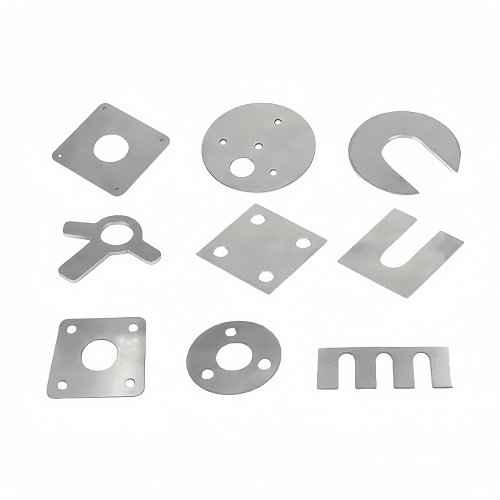
What Is CNC Cutting?
CNC cutting uses computer numerical control to guide a cutting tool along a programmed path. Depending on the machine, the tool may be a rotating router bit, milling cutter, plasma torch, or another cutting mechanism.
For example, CNC routing removes material through direct contact between a rotating cutting tool and the workpiece. The machine follows programmed coordinates to create profiles, slots, grooves, pockets, and other features.
CNC cutting is commonly used for compatible metals, plastics, wood, and composite materials. Its capabilities depend on the machine type, tool selection, material properties, and required part geometry.
What Is Laser Cutting?
Laser cutting uses a concentrated laser beam to heat, melt, burn, or vaporize material along a programmed cutting path. Assist gases may be used to help remove molten material and improve the cutting process.
Fiber laser systems are widely used for cutting metal sheets, while CO2 laser systems can process certain nonmetallic materials, depending on the machine configuration and material compatibility.
Laser cutting is particularly suitable for flat parts, intricate outlines, narrow slots, and detailed profiles. It can also support high-volume production when the material, thickness, and design are appropriate for the selected laser system.
CNC Cutting vs. Laser Cutting: Key Differences
| Comparison Factor | CNC Cutting | Laser Cutting |
|---|---|---|
| Working Principle | May use a rotating tool or another CNC-controlled cutting mechanism. | Uses a focused laser beam to cut material. |
| Material Removal | Mechanical cutting removes material with a tool; other CNC methods use different mechanisms. | Thermal energy melts, burns, or vaporizes material. |
| Material Compatibility | Depends on the machine and tool; routing can process suitable wood, plastics, and composites. | Depends on laser type and material; fiber lasers are common for metals, while CO2 lasers can process selected nonmetals. |
| Design Suitability | Suitable for profiles, grooves, pockets, and certain three-dimensional features. | Well suited to detailed two-dimensional profiles and intricate sheet designs. |
| Heat Effects | Mechanical cutting avoids a laser-induced heat-affected zone, although cutting can still generate heat. | May produce a heat-affected zone, discoloration, or thermal distortion depending on material and settings. |
| Tool Contact | Mechanical cutting tools contact the workpiece and experience wear. | The laser beam cuts without a conventional mechanical cutting tool contacting the workpiece. |
| Edge Quality | Depends on tooling, feed rate, material, and machine setup. | Depends on laser parameters, material, thickness, assist gas, and machine capability. |
| Cost Factors | Tooling, machine time, setup, tool wear, and finishing. | Laser power, material thickness, cutting speed, assist gas, setup, and finishing. |
1. Differences in Working Principles
The main difference between mechanical CNC cutting and laser cutting is how each process separates material.
In CNC routing, a rotating cutting tool physically removes material while the machine controls the toolpath. The cutter must be suitable for the material and geometry, and tool wear can affect dimensional accuracy and surface quality.
Laser cutting uses concentrated thermal energy instead of a conventional cutting bit. Because there is no mechanical cutting force from a rotating tool, the process can be advantageous for thin profiles, intricate contours, and parts that are difficult to cut using larger physical tools.
However, laser cutting introduces thermal effects that must be considered when processing heat-sensitive materials or parts with demanding edge-quality requirements.
2. Differences in Material Compatibility
Material compatibility is one of the most important factors when comparing CNC cutting with laser cutting.
CNC Cutting Materials
Wood: Suitable for furniture components, panels, decorative products, and signage.
Plastics: Compatible plastic sheets and blocks can be routed or machined into custom shapes.
Composites: Certain composite materials can be mechanically cut using appropriate tools and dust-control measures.
Metals: Suitable metals can be processed using Cnc Milling or other compatible CNC cutting technologies.
Laser Cutting Materials
Sheet metal: Fiber laser cutting is commonly used for compatible steel, stainless steel, and aluminum sheets.
Acrylic: Compatible acrylic sheets can be laser cut using suitable laser equipment and process settings.
Wood and plywood: Certain wood products can be cut using suitable laser systems, subject to thickness and fire-safety requirements.
Other nonmetals: Some textiles, paper-based materials, and other nonmetals can be processed using compatible laser equipment.
Not every material is suitable for laser processing. Certain plastics can release hazardous fumes, and reflective metals may require specialized laser equipment. Buyers should confirm material compatibility and appropriate ventilation or extraction requirements before choosing a process.
3. Differences in Precision and Edge Quality
Both CNC cutting and laser cutting can produce accurate parts, but the achievable results depend on the equipment, material, design, and process settings.
Laser cutting can produce narrow kerfs and intricate profiles, making it suitable for detailed sheet components. However, the finished edge may show heat-related effects, dross, or discoloration under certain conditions.
Mechanical CNC cutting can provide clean edges and controlled surface finishes when the tool geometry, cutting parameters, and material are properly matched. It may also be more suitable for certain features that require controlled cutting depth or three-dimensional machining.
When comparing suppliers, specify the required dimensional tolerances and edge-quality standards instead of assuming that one technology is always more accurate than the other.
4. Differences in Production Efficiency
Production efficiency depends on part complexity, material thickness, batch size, machine capability, and the number of required operations.
Laser cutting can be highly efficient for flat sheet parts with intricate outlines, particularly when many profiles can be arranged on a sheet to reduce material waste. It can also avoid the tool changes associated with different mechanical cutting operations.
CNC routing can be efficient for compatible nonmetallic sheets, thicker panels, and designs requiring grooves, pockets, or features at different depths. For these applications, a router may complete several operations within one setup.
For repeat orders, buyers should compare total production time, including setup, loading, cutting, unloading, inspection, and finishing, rather than looking only at the machine's cutting speed.
5. CNC Cutting vs. Laser Cutting: Which Is More Cost-Effective?
There is no universal answer because the cost depends on the specific part and production requirements.
Laser cutting may be cost-effective for flat sheet components with detailed profiles, especially when high cutting speeds and efficient material nesting reduce the cost per part.
CNC routing may be a better option for suitable plastics, wood panels, and composite materials, particularly when the design includes slots, grooves, pockets, or controlled-depth features.
When comparing quotations, consider the following cost factors:
Material type, thickness, and utilization rate.
Machine setup and programming time.
Cutting speed and total cycle time.
Tooling or assist-gas consumption.
Scrap rate and dimensional inspection requirements.
Deburring, edge finishing, and other post-processing.
Order quantity and repeat-production requirements.
Requesting quotations based on the same drawings, materials, tolerances, and quantities makes it easier to compare the actual cost of each manufacturing method.
When Should You Choose CNC Cutting?
CNC cutting is often a suitable choice when the part requires mechanical material removal, controlled cutting depth, or features beyond a simple two-dimensional profile.
Consider CNC routing or machining when:
The part includes grooves, pockets, slots, or other depth-related features.
The material is better suited to mechanical cutting than laser processing.
A specific surface finish or edge geometry is required.
The design includes multiple machining operations.
The application requires compatible three-dimensional machining capabilities.
When Should You Choose Laser Cutting?
Laser cutting is often a strong option for flat components that require detailed profiles, narrow cuts, and efficient sheet processing.
Consider laser cutting when:
The material is compatible with the selected laser technology.
The design consists primarily of two-dimensional contours.
Small features or intricate outlines are important.
Production requires repeatable profiles across multiple sheet parts.
The required edge quality can be achieved within the material's thermal-processing limits.
Can CNC Cutting and Laser Cutting Be Used Together?
Yes. Some manufacturing projects benefit from combining different CNC processes. Laser cutting can create the initial sheet profile, while CNC milling or routing can produce additional features that require controlled depth, machining, or a particular surface finish.
The best process sequence depends on the part design, material, tolerance requirements, and manufacturing cost. Combining processes may add setup and handling costs, so the benefits should be evaluated against the extra operations involved.
FAQ About CNC Cutting and Laser Cutting
Is laser cutting a type of CNC cutting?
Yes. Laser cutting machines commonly use CNC systems to control the laser head and follow programmed cutting paths. However, CNC cutting is a broader term that also includes mechanical routing, plasma cutting, waterjet cutting, and other computer-controlled processes.
Is CNC cutting better than laser cutting?
Neither method is universally better. CNC routing or machining may be more suitable for depth-related features and certain materials, while laser cutting is often advantageous for detailed two-dimensional profiles. The right choice depends on the specific project requirements.
Which process is better for thick materials?
The answer depends on the material, thickness, and machine capacity. CNC machining, laser cutting, plasma cutting, or waterjet cutting may be suitable in different situations. Confirm the machine's processing limits and the required edge quality before selecting a method.
Which process is better for intricate designs?
Laser cutting is often suitable for intricate two-dimensional sheet profiles. CNC machining or routing may be preferable when the design includes grooves, pockets, or features at different depths.
How can I choose the right cutting method for my project?
Start by identifying the material, thickness, part geometry, dimensional tolerances, edge-quality requirements, production quantity, and budget. A manufacturing supplier can then recommend a suitable process based on the part drawing and intended application.
Conclusion
The difference between CNC cutting and laser cutting lies mainly in the cutting mechanism, material compatibility, achievable features, and production requirements. Mechanical CNC cutting is useful for depth-related features and compatible materials, while laser cutting is well suited to detailed profiles and many flat-sheet applications.
For manufacturers and purchasing teams, the most effective choice is the process that meets the required specifications while balancing production efficiency, quality, and total cost.
Before finalizing a manufacturing method, provide your supplier with the part drawing, material specifications, thickness, required tolerances, surface-finish expectations, and estimated order quantity. This information helps determine the most appropriate process for your application.