


CNC machined components are precision parts manufactured using computer numerical control (CNC) machines. They are widely used in automotive, electronics, medical equipment, aerospace, industrial machinery, and other applications that require accurate and consistent components.
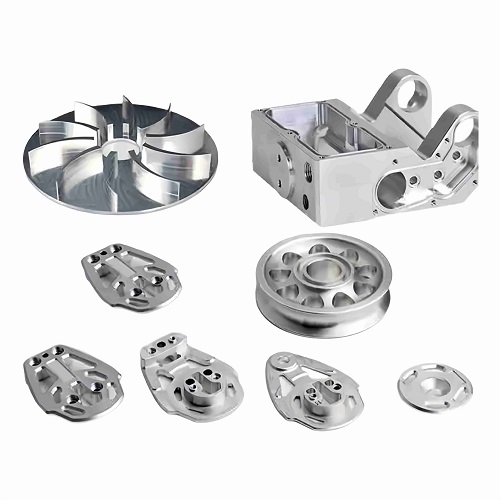
Unlike manual machining, CNC machining uses computer-controlled equipment to remove material from a workpiece according to a digital design. This manufacturing method allows manufacturers to produce complex geometries, tight tolerances, and repeatable parts efficiently.
What Are CNC Machined Components?
CNC machined components are parts produced by cutting, drilling, turning, milling, or otherwise removing material from a solid workpiece. Depending on the application, materials may include aluminum, stainless steel, carbon steel, brass, copper, titanium, and engineering plastics.
These components can range from simple shafts and brackets to highly complex precision parts. Precision CNC components are particularly important in industries where dimensional accuracy and reliable performance are critical.
CNC machining can also be used to manufacture custom CNC components according to specific drawings, dimensions, tolerances, and application requirements.
How Does CNC Machining Work?
The CNC machining process begins with a digital design. Engineers normally create a 2D drawing or 3D CAD model that defines the dimensions, geometry, tolerances, and other requirements of the component.
The CAD design is then converted into machine instructions through CAM software. These instructions control the movement of the cutting tools, spindle, workpiece, and other machine functions.
Once the program is prepared, the workpiece is securely positioned in the CNC machine. Cutting tools then remove material according to the programmed tool paths until the required component shape is achieved.
What Are the Main Steps in Making CNC Machined Components?
1. Design and Engineering
The first step is creating a detailed CAD model or engineering drawing. The design should specify dimensions, material, tolerances, surface finish, and other important requirements.
Proper design is particularly important for precision machined components, because unnecessary tight tolerances or difficult geometries can increase machining time and production costs.
2. Material Selection
Selecting the right material is an important part of CNC manufacturing. Different applications require different combinations of strength, hardness, corrosion resistance, weight, thermal performance, and machinability.
Aluminum is commonly selected when low weight and good machinability are required. Stainless steel is suitable for applications requiring strength and corrosion resistance, while brass and copper may be used for electrical and mechanical components.
3. CNC Programming
After the design and material are confirmed, CAM software is used to generate CNC programs. The program controls cutting speed, feed rate, tool movement, spindle speed, and machining sequences.
An experienced CNC machining team can optimize tool paths to improve machining efficiency, reduce tool wear, and maintain consistent component quality.
4. Machining
The prepared material is placed into the CNC machine, and machining begins. Depending on the component design, manufacturers may use Cnc Milling, CNC turning, drilling, tapping, boring, or a combination of different processes.
CNC machined parts can be produced using different machine configurations. CNC milling is suitable for many complex shapes and flat surfaces, while cnc turning is commonly used for cylindrical components such as shafts, pins, and bushings.
5. Surface Finishing
After machining, additional surface treatments may be applied depending on the application. Common options include anodizing, polishing, plating, powder coating, and other finishing processes.
Surface finishing can improve appearance, corrosion resistance, wear resistance, or other functional properties of the component.
6. Inspection and Quality Control
Finished components are inspected to confirm that they meet the specified dimensions and tolerances. Depending on the requirements, manufacturers may use calipers, micrometers, height gauges, CMM equipment, and other measuring tools.
Quality inspection is especially important for high precision CNC components used in demanding industrial applications.
What Materials Can Be Used for CNC Machined Components?
One of the advantages of CNC machining is its compatibility with a wide range of engineering materials. Common options include:
Aluminum
Stainless steel
Carbon steel
Brass
Copper
Titanium
ABS and other engineering plastics
PEEK and other high-performance plastics
The appropriate material depends on the component's operating environment, mechanical requirements, budget, and machining characteristics.
What Are the Advantages of CNC Machined Components?
CNC machining provides several advantages for manufacturers and product developers.
High precision: Computer-controlled machining can achieve accurate and repeatable dimensions.
Complex geometries: CNC machines can manufacture shapes that are difficult to produce manually.
Consistent quality: The same program can be used to produce large quantities of identical components.
Material flexibility: CNC machines can process many metals and engineering plastics.
Custom production: Components can be manufactured according to customer drawings and specifications.
Scalability: CNC machining can support prototypes, small batches, and larger production runs.
Where Are CNC Machined Components Used?
CNC machined components are used across many industries because of their precision, repeatability, and design flexibility.
Automotive manufacturing
Aerospace equipment
Medical devices
Electronic equipment
Industrial machinery
Robotics and automation
Energy equipment
Consumer products
CNC machined components are precision parts manufactured using computer-controlled machining processes. From CAD design and material selection to CNC programming, machining, surface finishing, and inspection, every stage contributes to the final quality of the component.
With the ability to produce complex shapes, tight tolerances, and consistent results, CNC machining is an important manufacturing solution for companies that require reliable custom and precision components.
Frequently Asked Questions
What are CNC machined components?
CNC machined components are precision parts manufactured from materials such as metals or engineering plastics using computer-controlled machining equipment.
What materials are commonly used for CNC machining?
Common materials include aluminum, stainless steel, carbon steel, brass, copper, titanium, and various engineering plastics.
What is the difference between CNC milling and CNC turning?
CNC milling uses rotating cutting tools to machine a workpiece, while CNC turning typically rotates the workpiece against a cutting tool and is commonly used for cylindrical components.
Can CNC machines make custom components?
Yes. CNC machining is suitable for custom components manufactured according to engineering drawings, CAD files, dimensions, and application requirements.