


Choosing the right CNC machined components manufacturer is important for companies that require reliable precision parts, consistent quality, and stable production. The right supplier should not only provide competitive pricing but also have the machining capabilities, quality control, materials, and production capacity required for your project.
Whether you need prototypes, small batches, or high-volume production, evaluating a potential CNC machining supplier carefully can help reduce quality problems, delivery delays, and unnecessary costs.
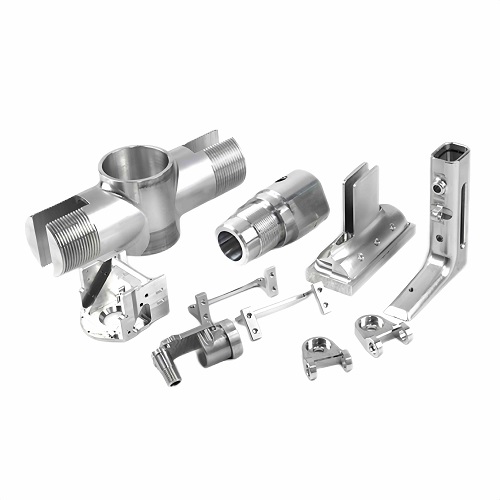
1. Evaluate the Manufacturer's CNC Machining Capabilities
The first factor to consider is whether the manufacturer has the right equipment and machining capabilities for your components.
Ask about the types of CNC machines available, such as Cnc Milling machines, CNC turning centers, multi-axis machining centers, and other specialized equipment.
For complex precision CNC components, multi-axis machining capabilities may provide greater flexibility and reduce the number of setups required during production.
2. Check Experience With Your Materials
Different materials require different machining strategies, cutting tools, speeds, and feeds. Before selecting a CNC machined components supplier, confirm that the manufacturer has experience working with the materials required for your project.
Common CNC machining materials include:
Aluminum
Stainless steel
Carbon steel
Brass
Copper
Titanium
Engineering plastics
A manufacturer experienced with your material can help improve machining efficiency and reduce potential production issues.
3. Consider Precision and Tolerance Requirements
Precision requirements can vary significantly between different applications. Some components may only require standard machining tolerances, while others require extremely tight dimensional control.
When evaluating a Precision CNC Machining manufacturer, ask about its typical machining tolerances and inspection capabilities.
It is also important to provide complete engineering drawings that clearly specify critical dimensions and tolerances. This allows the manufacturer to determine whether the required accuracy can be achieved consistently.
4. Review Quality Control Procedures
Quality control is one of the most important factors when selecting a CNC manufacturer. A reliable supplier should have clear inspection procedures throughout the production process.
Quality control may include:
Incoming material inspection
First article inspection
In-process inspection
Dimensional inspection
Final inspection
Surface finish inspection
Packaging inspection
Depending on the component requirements, inspection equipment may include coordinate measuring machines, micrometers, calipers, height gauges, and other precision measuring instruments.
5. Check Production Capacity
A supplier that can produce prototypes may not necessarily have enough capacity for large-volume production. Therefore, production capability should match your expected order volume.
Ask potential CNC parts manufacturers about their monthly production capacity, available equipment, staffing, and ability to handle urgent or repeat orders.
A manufacturer with sufficient capacity can provide more stable delivery times as your order volume increases.
6. Evaluate Custom CNC Machining Capabilities
If you require components based on your own drawings, CAD files, or specifications, make sure the supplier has experience with custom manufacturing.
A capable custom CNC machining supplier should be able to review technical drawings, identify potential manufacturing issues, recommend suitable machining processes, and provide feedback for design optimization.
This engineering support can be particularly valuable for complex components or new product development projects.
7. Ask About Surface Finishing Options
Surface treatment can affect both the appearance and performance of CNC machined components. Depending on the material and application, common options include anodizing, polishing, plating, powder coating, brushing, and other treatments.
Choosing a manufacturer that can coordinate machining and finishing processes can simplify production and reduce communication between multiple suppliers.
8. Compare Pricing Carefully
Price is important, but the lowest quotation is not always the best option. CNC machining costs can be influenced by material, component complexity, machining time, tolerances, surface finishing, quantity, and inspection requirements.
When comparing quotes from different CNC machined components manufacturers, make sure the quotations are based on the same specifications.
A slightly higher unit price may provide better value if the supplier offers more reliable quality, shorter lead times, stronger engineering support, or better quality control.
9. Check Production Lead Time
Delivery time can be critical for manufacturers with tight production schedules. Before placing an order, confirm the expected lead time for samples, prototypes, first production runs, and repeat orders.
It is also useful to understand how the supplier handles urgent orders or changes to production schedules.
10. Review Communication and Technical Support
Good communication can significantly improve the efficiency of a CNC machining project. The supplier should be able to understand technical drawings, respond to questions clearly, and provide timely updates during production.
A manufacturer with experienced engineers can also help identify potential design-for-manufacturing issues before production begins.
11. Consider Certifications and Industry Experience
Depending on your industry and application, certifications and relevant manufacturing experience may be important selection criteria.
Ask whether the manufacturer has experience serving industries such as automotive, medical, aerospace, electronics, robotics, or industrial machinery.
Relevant industry experience can help the supplier better understand specific quality, documentation, and manufacturing requirements.
12. Request Samples Before Mass Production
Before placing a large order, requesting samples is a practical way to evaluate the supplier's actual capabilities.
Review the sample for dimensional accuracy, material quality, surface finish, appearance, and overall workmanship. If the sample meets your requirements, you can then proceed with larger production quantities with greater confidence.
What Makes a Good CNC Machined Components Manufacturer?
A reliable manufacturer should provide a combination of:
Advanced CNC machining equipment
Experienced engineers and machinists
Stable production capacity
Strong quality control
Material and finishing options
Custom machining capabilities
Competitive and transparent pricing
Reliable delivery
Technical communication and support
Choosing the right CNC machined components manufacturer requires more than comparing prices. Businesses should evaluate machining capabilities, material experience, precision, quality control, production capacity, customization, surface finishing, lead time, and technical support.
By carefully evaluating potential suppliers and requesting samples before mass production, buyers can reduce production risks and establish a reliable long-term supply relationship.
Whether you need prototypes, low-volume production, or high-volume CNC machined components, selecting a manufacturer with the right technical capabilities and quality standards is essential for achieving consistent results.
Frequently Asked Questions
How do I choose a CNC machined components manufacturer?
Consider the manufacturer's machining equipment, material capabilities, precision, quality control, production capacity, customization services, lead time, pricing, and technical support.
Should I request a sample before placing a bulk order?
Yes. A sample allows you to verify dimensions, material, surface finish, workmanship, and overall quality before committing to mass production.
What materials can CNC machining manufacturers process?
Many manufacturers process aluminum, stainless steel, carbon steel, brass, copper, titanium, and engineering plastics. The available materials depend on the supplier's equipment and experience.
What is the difference between a CNC machining supplier and manufacturer?
A CNC machining manufacturer generally operates its own production equipment and manufacturing processes, while a supplier may manufacture products directly or coordinate production through other facilities.