Laser Cutting is a precision manufacturing process that uses a concentrated laser beam to cut materials into specific shapes and dimensions. Unlike conventional cutting methods that rely on physical blades or cutting tools, laser cutting uses focused thermal energy to melt, burn, vaporize, or remove material along a programmed cutting path.
Today, laser cutting is widely used in metal fabrication, automotive components, machinery, electronics, industrial equipment, enclosures, sheet metal parts, and custom manufacturing. With CNC control, a laser cutting machine can follow digital design files and produce complex profiles with high repeatability and relatively low setup requirements.
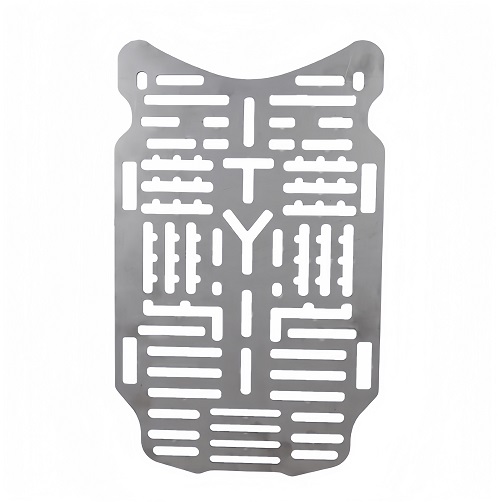
How Does Laser Cutting Work?
The basic principle of laser cutting is to concentrate a high-energy laser beam onto a small area of the workpiece. The concentrated energy rapidly heats the material. Depending on the material and cutting method, the material may melt, vaporize, or react with the cutting gas.
At the same time, an assist gas is commonly directed through the cutting nozzle. The gas helps remove molten material from the cutting path and can influence cutting speed, edge quality, and oxidation. Oxygen, nitrogen, and compressed air are commonly used depending on the material and required result.
1. Create a Digital Design
The process normally begins with a CAD drawing or other compatible digital design file. The drawing defines the required dimensions, holes, slots, contours, and other features of the part.
2. Prepare the Cutting Program
The design is converted into machine instructions through CAM software. The cutting path, material parameters, laser power, speed, focus position, and assist gas settings can be adjusted according to the project requirements.
3. Focus the Laser Beam
The laser beam passes through an optical system that concentrates the energy into a small focal area. The concentrated beam provides the heat required to penetrate and separate the material.
4. Pierce the Material
Before cutting the contour, the laser first creates a penetration point through the material. Piercing parameters depend on material type and thickness.
5. Cut Along the Programmed Path
The CNC-controlled cutting head follows the programmed geometry. The laser continuously applies energy along the cutting path while the assist gas helps remove molten material from the kerf.
6. Inspect and Finish the Parts
After cutting, the finished parts can be inspected for dimensions, edge condition, burrs, and other requirements. Depending on the application, additional operations such as deburring, bending, welding, grinding, or surface finishing may follow.
What Are the Main Types of Laser Cutting?
Different laser sources are used for different manufacturing requirements. The most common industrial technologies include fiber laser and CO2 laser systems.
Fiber Laser Cutting
Fiber laser cutting is widely used for metal processing. It is suitable for materials such as carbon steel, stainless steel, aluminum, brass, and copper, depending on machine configuration, material thickness, and process parameters.
Fiber lasers are particularly suitable for precision Sheet Metal Fabrication and industrial metal parts where speed, repeatability, and edge quality are important.
CO2 Laser Cutting
CO2 laser systems can be used for a broad range of non-metal materials and certain metal applications. Depending on the machine and material, applications can include acrylic, wood, plastics, paper, textiles, and other materials.
The appropriate laser source should always be selected according to the material, thickness, required cutting quality, and production requirements.
What Materials Can Be Cut with Laser Cutting?
One of the main advantages of laser cutting is its versatility. The suitable material range depends on the laser source, machine configuration, material properties, and thickness.
For industrial metal fabrication, common laser-cut materials include:
Carbon steel
Mild steel
Stainless steel
Aluminum
Brass
Copper
Galvanized steel
Selected alloy materials
Laser systems can also process various non-metal materials, although material compatibility should be confirmed before production.
What Are the Advantages of Laser Cutting?
High Cutting Precision
The focused laser beam allows manufacturers to produce detailed profiles, small holes, slots, and complex contours. This makes laser cutting suitable for components that require controlled dimensions and repeatable geometry.
Non-Contact Processing
Laser cutting is a non-contact process. There is no conventional cutting blade directly pressing against the workpiece, which can reduce mechanical contact and simplify the production of complex profiles.
Flexible Production
Because the cutting path is controlled digitally, changing from one part design to another generally requires changing the production program rather than manufacturing a dedicated cutting die.
Suitable for Prototyping and Production
Laser cutting can be used for prototypes, samples, small batches, and larger production runs. This flexibility makes it useful when manufacturers need to validate a design before moving into higher-volume production.
Efficient Material Utilization
Parts can be arranged through nesting software to make better use of sheet material. Efficient nesting can reduce scrap and help control material costs, especially for projects involving multiple parts.
What Industries Use Laser Cutting?
Laser cutting services are used across many manufacturing industries because the process can produce both simple and complex profiles.
Automotive: brackets, panels, structural components, and custom metal parts.
Machinery: machine covers, frames, brackets, plates, and fabricated components.
Electronics: enclosures, mounting plates, shields, and precision components.
Industrial Equipment: structural parts, housings, supports, and equipment components.
Construction: metal plates, brackets, supports, and fabricated components.
Custom Manufacturing: prototypes, low-volume parts, replacement components, and custom sheet metal products.
Laser Cutting vs. Traditional Cutting Methods
Laser cutting is different from mechanical cutting processes because it uses concentrated thermal energy instead of a conventional cutting edge. This can provide greater flexibility for complex profiles and reduce the need for dedicated tooling in many applications.
However, laser cutting is not automatically the best solution for every project. Material type, thickness, tolerance, production quantity, edge requirements, and downstream processing should all be considered when selecting a manufacturing process.
What Factors Affect Laser Cutting Quality?
Several factors can influence the final quality of a laser-cut part:
For example, stainless steel and aluminum may require different cutting parameters and assist gas strategies than carbon steel. The correct combination of machine settings and material parameters is essential for achieving consistent results.
How to Choose a Laser Cutting Service?
When selecting a custom laser cutting service, buyers should look beyond the basic ability to cut material. Consider whether the supplier can handle your required material, thickness, dimensions, tolerances, production quantity, and finishing requirements.
It is also useful to evaluate drawing support, quality inspection, production capacity, communication, lead time, packaging, and the supplier's experience with similar components.
For custom manufacturing projects, providing a complete CAD drawing with material specifications and critical dimensions can help the supplier evaluate the project and prepare a more accurate quotation.
FAQ About Laser Cutting
Is laser cutting suitable for custom metal parts?
Yes. Laser cutting is widely used for custom metal parts because the cutting path can be controlled digitally. It is suitable for prototypes, low-volume production, and many repeat-production applications.
Is laser cutting accurate?
Laser cutting can provide high dimensional accuracy, but the actual tolerance depends on the machine, material, thickness, geometry, thermal behavior, and production parameters. Critical tolerances should be discussed with the manufacturer before production.
Does laser cutting leave burrs?
Laser-cut edges can have different levels of dross or burr depending on material, thickness, machine settings, cutting speed, gas selection, and other process conditions. Additional deburring can be used when a specific edge condition is required.
Can laser cutting be used for small production runs?
Yes. Because laser cutting does not normally require a dedicated cutting die, it can be practical for prototypes, samples, and low-volume production.
What file format is normally required for laser cutting?
Manufacturers commonly work with CAD and vector-based design files. The exact accepted formats depend on the supplier and their CAM workflow, so it is best to confirm the required format before submitting a drawing.
Laser cutting is a flexible and precise manufacturing process that uses a focused laser beam to separate material along a digitally programmed path. Its combination of precision, flexibility, non-contact processing, and compatibility with many materials makes it an important process for modern manufacturing.
For custom parts, the right laser cutting solution depends on the material, thickness, geometry, tolerance, quantity, and required finish. Choosing an experienced manufacturing partner can help ensure that the cutting process matches the technical and production requirements of your project.