A 5 axis CNC machine is a computer-controlled machining system that can control five different axes of movement to machine a workpiece. It combines the three conventional linear axes, X, Y, and Z, with two additional rotary axes. This allows the cutting tool or workpiece to change orientation during machining and approach the part from different angles.
So, what is a 5 axis CNC machine in simple terms? Unlike a conventional 3-axis CNC machine that mainly moves along X, Y, and Z, a 5-axis machine adds two rotational movements. This extra flexibility allows manufacturers to machine multiple sides, angled features, deep cavities, and complex curved surfaces with fewer setups.
5-axis CNC machining is commonly used for complex and high-precision components in industries such as aerospace, automotive, medical equipment, mold making, energy, and industrial machinery.
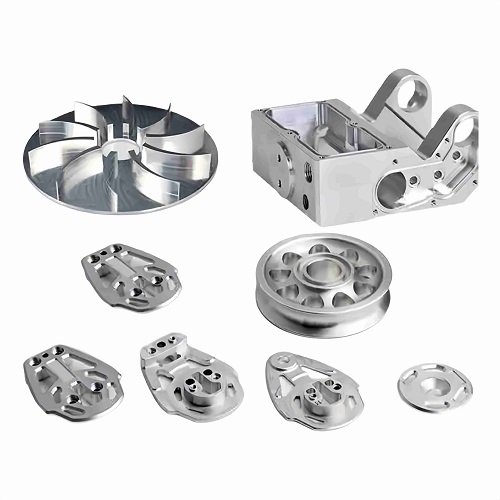
What Does "5 Axis" Mean in CNC Machining?
The term 5 axis refers to the number of independently controlled directions of movement available to the CNC machine.
The first three axes are the same basic linear axes found on most Cnc Milling machines:
X-axis: Provides linear movement from left to right.
Y-axis: Provides linear movement from front to back.
Z-axis: Provides vertical movement, typically controlling the tool's up-and-down position.
The other two axes are rotary axes. Depending on the machine design, they may be identified as A, B, or C axes. For example, the A-axis rotates around the X-axis, the B-axis rotates around the Y-axis, and the C-axis rotates around the Z-axis. A particular machine uses two of these rotary directions to provide its five-axis capability.
How Does a 5 Axis CNC Machine Work?
A 5 axis CNC machine works by coordinating linear and rotary movements according to a programmed toolpath. The process normally starts with a digital 3D model of the required component.
1. Create a CAD Model
The manufacturing process begins with a 3D CAD model. The model defines the dimensions, geometry, holes, curves, surfaces, and other features of the finished component.
Complex parts may contain angled surfaces, compound curves, deep pockets, or features located on multiple sides. These geometries are often difficult to machine efficiently using only three linear axes.
2. Generate the CNC Toolpath
The CAD model is imported into CAM software, where the programmer develops machining strategies and toolpaths.
For 5-Axis Machining, CAM software must calculate not only the cutting position but also the orientation of the cutting tool. The software determines how the tool and workpiece should move while avoiding collisions with the part, fixture, and machine components.
3. Transfer the Program to the CNC Controller
The CAM-generated toolpath is converted into machine instructions, commonly using G-code and related CNC control commands. The CNC controller interprets these instructions and coordinates the machine's linear and rotary axes.
4. Machine the Workpiece
During machining, the X, Y, and Z axes position the cutting tool, while the two rotary axes change its orientation or rotate the workpiece.
The five movements can be coordinated to maintain the desired tool angle relative to the workpiece. This allows the machine to reach surfaces that would otherwise require the operator to manually reposition the part.
In simultaneous 5-axis machining, all five axes can move together during cutting. This is particularly useful for complex curved surfaces and highly contoured components.
What Is the Difference Between 3+2 and Simultaneous 5 Axis Machining?
Not every 5-axis CNC operation requires all five axes to move continuously. Two common approaches are 3+2 machining and simultaneous 5-axis machining.
3+2 Axis Machining
In 3+2 machining, the two rotary axes first position the workpiece or cutting tool at a specific angle. Once the desired orientation is established, the actual cutting operation is performed using the three linear axes.
This method is useful for machining angled holes, pockets, side features, and multiple faces while reducing the number of manual setups. It can also be easier to program than continuous five-axis machining.
Simultaneous 5 Axis Machining
In simultaneous 5-axis machining, the three linear axes and two rotary axes can move at the same time while the tool is cutting.
The tool orientation continuously changes as it follows the geometry of the workpiece. This makes simultaneous machining particularly suitable for turbine blades, impellers, molds, complex aerospace components, and other parts with complicated three-dimensional surfaces.
What Are the Main Types of 5 Axis CNC Machines?
5-axis CNC machines can be designed in several different mechanical configurations. The main difference is where the rotary axes are located.
1. Rotary Table or Trunnion Machine
In a rotary-table configuration, the workpiece is mounted on a table that can rotate and tilt. The spindle generally provides the three linear X, Y, and Z movements.
This configuration is commonly used for small- and medium-sized components because the rotary table provides flexible access to multiple sides of the workpiece.
2. Tilting Head Machine
In a tilting-head configuration, the rotary movements are built into the spindle head. The cutting tool can tilt and rotate while the workpiece remains relatively stationary.
This configuration can be advantageous when machining larger or heavier workpieces that are difficult to rotate.
3. Head-Table Configuration
Some machines combine one rotary axis in the spindle head with another rotary axis in the worktable. This hybrid design provides flexibility for different workpiece sizes and machining requirements.
The best configuration depends on factors such as workpiece dimensions, weight, material, required machining envelope, tooling, and the types of parts being produced.
5 Axis CNC Machine vs. 3 Axis CNC Machine
The biggest difference between a 3-axis and a 5-axis CNC machine is the ability to change the tool or workpiece orientation during machining.
| Feature | 3 Axis CNC | 5 Axis CNC |
|---|
| Linear Axes | X, Y, Z | X, Y, Z |
| Rotary Axes | None | Two rotary axes |
| Complex Surfaces | More difficult | Highly suitable |
| Multiple Sides | Usually requires repositioning | Can access multiple sides with fewer setups |
| Programming | Generally simpler | More complex |
| Typical Applications | Simple and moderately complex parts | Complex, multi-sided and contoured parts |
A 5-axis machine does not automatically make every job faster or more economical. Simple flat components may be produced more efficiently on a conventional 3-axis machine. The primary advantage of 5-axis technology appears when part geometry requires multiple orientations or complex tool access.
What Are the Advantages of a 5 Axis CNC Machine?
1. Fewer Workpiece Setups
One of the main benefits of 5-axis machining is the ability to machine multiple faces of a component without manually removing and repositioning it after every operation.
Fewer setups can reduce setup time and minimize positioning errors caused by repeated clamping and re-zeroing.
2. Better Access to Complex Geometry
The additional rotary axes allow the cutting tool to approach the workpiece from different directions. This makes it easier to machine angled surfaces, deep cavities, undercuts, and compound curves.
3. Improved Accuracy
When multiple features can be machined without removing the workpiece, there are fewer opportunities for errors caused by repositioning. This can improve consistency between features and support high-precision manufacturing.
4. Better Surface Finish
A 5-axis machine can continuously adjust the cutting-tool orientation to better follow curved surfaces. This can reduce the need for excessive tool extension and help maintain more favorable cutting conditions.
5. Shorter Machining Time for Complex Parts
Although programming a 5-axis operation can be more complicated, complex components can often be completed with fewer setups and fewer separate operations.
For suitable parts, this can reduce overall production time and simplify workflow.
6. Improved Tool Access
Rotational movement allows the tool to approach difficult areas from more suitable directions. This can make it possible to use shorter and more rigid cutting tools for certain applications, which can help reduce vibration and improve machining stability.
What Are the Limitations of 5 Axis CNC Machining?
Although 5-axis CNC machining provides significant advantages, it is not the best choice for every manufacturing application.
Higher Equipment Cost
A 5-axis machining center generally involves more sophisticated mechanical components, rotary systems, CNC controls, and supporting equipment than a basic 3-axis machine.
More Complex Programming
Developing reliable 5-axis toolpaths requires appropriate CAM software, machining knowledge, simulation, and collision checking. Programming is generally more complicated than conventional 3-axis machining.
Higher Operator and Programmer Requirements
Operators and programmers need to understand tool orientation, rotary-axis limits, machine kinematics, workholding, and collision avoidance.
Not Necessary for Every Part
If a component has only simple planar surfaces and can be efficiently machined with three axes, investing in five-axis equipment may not provide enough additional value.
What Materials Can a 5 Axis CNC Machine Process?
A 5 axis CNC machine can be used with many of the same materials processed by other CNC milling machines. The appropriate machine configuration, cutting tools, speeds, feeds, and coolant strategy depend on the material.
Aluminum: Common in aerospace, automotive, electronics, and general precision machining.
stainless steel: Used for corrosion-resistant and high-strength components.
Carbon Steel: Suitable for structural and industrial components.
Titanium: Frequently used for demanding aerospace and medical applications.
Brass and Copper: Used for electrical, conductive, and precision components.
Engineering Plastics: Used for lightweight components, prototypes, and specialized industrial parts.
Tool Steel: Commonly used for molds, dies, and wear-resistant components.
What Parts Are Made With 5 Axis CNC Machines?
5-axis CNC machining is especially valuable when a component has complex geometry or multiple surfaces that are difficult to access with conventional machining.
Typical examples include:
Aerospace, automotive, medical, and mold-making applications particularly benefit from five-axis technology because many of their components contain complex curves, angled surfaces, or features distributed across multiple faces.
5 Axis CNC Applications by Industry
Aerospace
Aerospace components often feature aerodynamic surfaces, lightweight structures, and complex geometries. 5-axis machining can provide flexible tool access while reducing the number of setups required.
Automotive
Automotive manufacturers use 5-axis machining for prototypes, molds, engine components, performance parts, and other complex components.
Medical
Medical components such as implants and surgical instruments can require precise freeform surfaces and complex geometries. Five-axis machining can provide the tool access needed for these shapes.
Mold and Die Manufacturing
Mold cavities and dies often contain deep and curved surfaces. Five-axis machining allows the cutting tool to maintain a more suitable orientation while following these surfaces.
Industrial Machinery
Industrial equipment manufacturers use 5-axis machining for custom components that contain angled holes, complex recesses, multi-sided features, and precision mounting surfaces.
When Should You Use a 5 Axis CNC Machine?
A 5-axis CNC machine is generally worth considering when a part has one or more of the following characteristics:
Complex three-dimensional surfaces
Multiple angled faces
Features on several sides of the component
Deep or difficult-to-reach cavities
Undercuts or compound curves
Strict positional relationships between multiple features
A need to reduce the number of setups
A requirement for consistent surface quality on complex contours
For simple parts with accessible features, a 3-axis CNC machine may remain the more economical option. The right choice should be based on part geometry, production volume, tolerances, material, and overall manufacturing requirements.
What Should You Consider When Choosing a 5 Axis CNC Machine?
When selecting a 5-axis CNC machine, manufacturers should look beyond the number of axes and evaluate the complete machine configuration.
Work envelope: Make sure the machine can accommodate the size and weight of your typical workpieces.
Rotary-axis range: Check how far the rotary axes can tilt and rotate.
Spindle performance: Consider spindle speed, torque, power, and taper requirements.
Machine rigidity: A rigid structure is important for stable precision machining.
Accuracy and repeatability: Match machine specifications to the tolerances required by your parts.
CAM compatibility: Make sure your CAM system can generate appropriate five-axis toolpaths.
Workholding: Consider how fixtures and rotary tables affect the usable machining envelope.
After-sales support: Training, maintenance, spare parts, and technical support can significantly affect long-term machine performance.
Frequently Asked Questions
What is a 5 axis CNC machine?
A 5 axis CNC machine is a computer-controlled machining system that combines three linear axes, X, Y, and Z, with two rotary axes. This allows the cutting tool or workpiece to change orientation and access complex surfaces from multiple directions.
What are the five axes on a CNC machine?
The five controlled axes consist of three linear axes, X, Y, and Z, plus two rotary axes. Depending on the machine configuration, the rotary axes can be identified using A, B, or C.
What is the difference between 3-axis and 5-axis CNC?
A 3-axis CNC machine primarily moves along X, Y, and Z, while a 5-axis machine adds two rotary movements. The additional axes allow the tool to approach the workpiece from different angles and machine complex multi-sided geometry with fewer setups.
Can a 5 axis CNC machine replace a 3 axis machine?
A 5-axis machine can perform many operations that a 3-axis machine can perform, but it does not necessarily make every job more economical. Simple parts may still be faster and less expensive to produce on a 3-axis machine.
Is 5 axis CNC machining more accurate?
Five-axis machining can improve accuracy for suitable complex parts because fewer setups can reduce errors caused by repeatedly repositioning the workpiece. Actual accuracy still depends on machine construction, calibration, tooling, programming, workholding, and operating conditions.
Is 5 axis CNC machining difficult to program?
Five-axis programming is generally more complex than three-axis programming because the tool orientation and rotary-axis movements must also be controlled. Advanced CAM software, simulation, and experienced programmers are commonly used for reliable five-axis machining