


Ordering custom brass turned parts requires clear technical specifications to ensure that the finished components fit the intended assembly and perform as expected. Incomplete drawings, unspecified material grades, unclear tolerances, or missing surface finish requirements can lead to quotation delays, production changes, and quality issues.
For OEM buyers, engineers, and procurement teams, preparing a complete specification package helps a brass machining supplier assess manufacturability, estimate costs, and plan production more accurately. This guide explains the essential details to confirm before requesting a quotation for custom brass components.
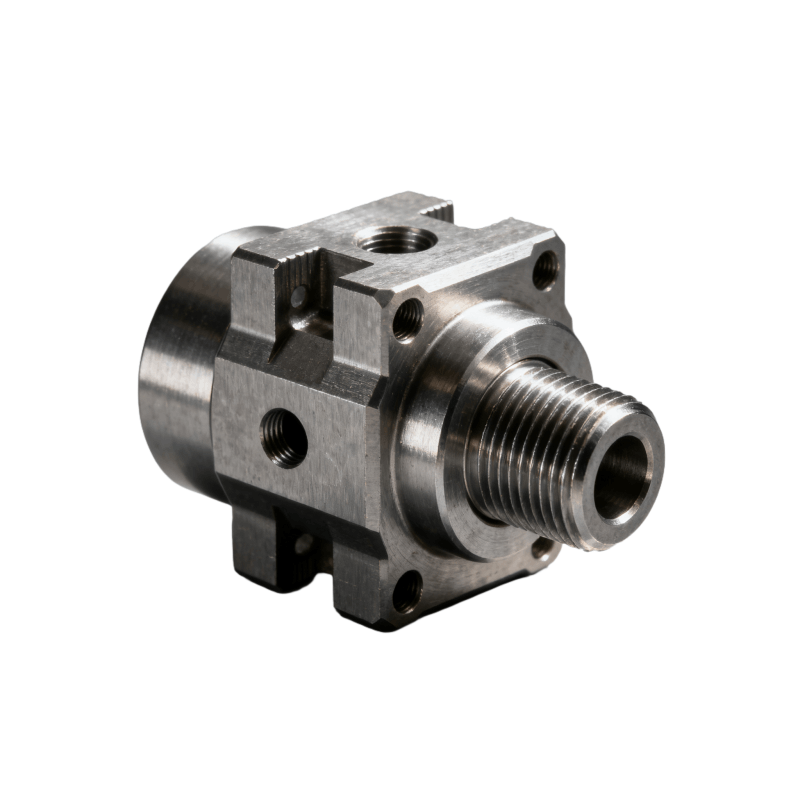
1. Provide a Complete Engineering Drawing
An engineering drawing is the starting point for most custom brass turned parts projects. It communicates the component's dimensions, geometry, tolerances, threads, and other manufacturing requirements.
Your drawing should include:
Overall dimensions: Specify the total length, outer diameter, inner diameter, and other essential measurements.
Feature dimensions: Identify grooves, shoulders, holes, slots, recesses, and other machined features.
Dimensional tolerances: Define acceptable variations for critical dimensions.
Thread details: State the thread standard, nominal size, pitch, and tolerance requirements where applicable.
Surface finish: Specify surface roughness or appearance requirements where they affect function or assembly.
Drawing revision: Include a revision number or date to help ensure that the supplier manufactures the correct version.
For complex components, provide a 3D model alongside the 2D drawing. The model can help clarify geometry, while the drawing should remain the controlling document for dimensions and tolerances unless otherwise agreed.
2. Specify the Brass Material Grade
Brass is a family of copper-zinc alloys rather than a single material. Different grades can vary in machinability, mechanical properties, corrosion resistance, and suitability for specific applications.
When ordering precision brass turned parts, specify the required alloy and applicable material standard. Avoid leaving the material selection entirely open if your design depends on specific mechanical, chemical, or regulatory requirements.
Material selection should consider:
Machinability: The alloy should be suitable for the required turning operations and production volume.
Mechanical properties: Strength and other properties should match the component's operating conditions.
Corrosion resistance: Consider exposure to moisture, chemicals, temperature, and other environmental factors.
Application requirements: Electrical, plumbing, fluid-control, and other applications may have specific material restrictions.
Compliance: Confirm applicable lead-content limits, drinking-water requirements, or other market-specific regulations where relevant.
If you do not have a specified brass grade, explain the component's function and working environment to the manufacturer. The supplier may suggest suitable options for your engineering team to review and approve.
3. Define Critical Dimensions and Tolerances
Tolerances determine the acceptable variation in a component's dimensions. They are especially important for custom brass turned parts used in assemblies where fit, sealing, positioning, or connection accuracy matters.
Not every dimension requires the same tolerance. Applying unnecessarily tight tolerances to noncritical features can increase machining time, inspection effort, and rejection risk without improving product performance.
Before production, identify:
Critical diameters and lengths
Thread dimensions and fit requirements
Concentricity, runout, or positional requirements where relevant
Sealing surfaces and mating features
General tolerances for dimensions not individually specified
Ask the supplier to review whether the requested tolerances are achievable for the component geometry and production method. If a feature is critical to function, clearly identify it on the drawing and specify the applicable inspection method.
4. Confirm Thread Specifications
Threads are common features in brass fittings, connectors, adapters, inserts, and other turned components. Incorrect thread specifications can prevent assembly even when the overall dimensions appear correct.
For threaded custom brass components, specify:
Thread standard, such as metric or the applicable inch-based standard
Nominal thread size and pitch
Internal or external thread configuration
Thread class, tolerance, or fit requirements
Thread depth and usable engagement length
Sealing requirements and mating component details, where relevant
Do not assume that threads with similar nominal sizes are interchangeable. Where a component must mate with an existing assembly, provide the relevant standard or interface drawing to reduce ambiguity.
5. Specify Surface Finish and Deburring Requirements
Surface finish affects the appearance, function, and assembly of brass turned parts. Some components require a machined finish, while others may need polishing, plating, or another treatment.
Clearly state whether your parts require:
A specified machined surface finish
Deburring and removal of sharp edges
Polishing or appearance requirements
Nickel plating, tin plating, or another specified coating
Restrictions on discoloration, scratches, or visible surface defects
If a coating is required, confirm the coating type, applicable thickness or performance requirements, and any relevant standards. Also discuss how the treatment may affect dimensions, threads, electrical contact, or assembly fit.
For parts with functional sealing surfaces or tight dimensional requirements, define the acceptable surface condition rather than relying on a general instruction such as "smooth finish."
6. Clarify Quantity, MOQ, and Delivery Requirements
Order quantity affects production planning and unit pricing for cnc turned brass parts. Prototype quantities, small production batches, and high-volume repeat orders may require different machining strategies and setup arrangements.
When requesting a quotation, provide:
Prototype or sample quantity, if required
Initial production quantity
Estimated annual demand or repeat-order forecast
Required delivery date
Expected order frequency
Packaging, labeling, and shipping requirements
Ask whether the manufacturer has an MOQ or setup charge and whether pricing changes at different order volumes. For recurring projects, discuss how revisions to the drawing or material specification will be managed between production batches.
7. Define Inspection and Quality Documentation
Quality requirements should be agreed upon before mass production, especially when brass turned components are used in critical assemblies or supplied to OEM customers.
Depending on your project, specify the required inspection and documentation, such as:
Dimensional inspection reports
Material certificates or material traceability records
Thread inspection results
Surface finish or coating verification
Sampling plans and batch acceptance criteria
Functional or leak testing, where applicable to the component
Not every order requires every type of report. The inspection plan should reflect the part's function, risk level, customer requirements, and applicable standards.
Providing these requirements with the original RFQ allows the supplier to account for inspection time and documentation in the quotation.
8. Check Manufacturing Feasibility Before Finalizing the Design
A drawing may define the required geometry, but not every design is equally efficient to machine. Deep internal features, narrow grooves, complex profiles, tight tolerances, and difficult-to-access surfaces can increase processing time or require additional operations.
Before approving the final design, discuss the following with your brass turning supplier:
Whether the component can be produced with the available machine configuration
Whether the specified tolerances are appropriate for the application
Whether a design adjustment could simplify machining
Whether secondary operations are needed
Whether the proposed process suits both prototype and mass production quantities
Manufacturing feedback can help identify potential issues before production starts. Any proposed design change should be reviewed and approved by the responsible engineering team before implementation.
Custom Brass Turned Parts RFQ Checklist
| Specification | Information to Provide |
|---|---|
| Technical drawing | 2D drawing, 3D model if available, and revision details |
| Material | Brass grade, material standard, and compliance requirements |
| Dimensions and tolerances | Critical dimensions, general tolerances, and fit requirements |
| Threads | Thread standard, size, pitch, class, and depth |
| Surface treatment | Finish, coating, deburring, and appearance requirements |
| Quantity and delivery | Sample quantity, production volume, forecast, and deadline |
| Quality documentation | Inspection reports, material records, and acceptance criteria |
Frequently Asked Questions
Q1: What information should I send when requesting custom brass turned parts?
Provide a technical drawing, brass grade, critical tolerances, thread details, surface finish, order quantity, inspection requirements, and delivery schedule. A 3D model or physical sample can provide additional clarification for complex components.
Q2: Can brass turned parts be manufactured from a 3D model?
A 3D model can help a manufacturer understand the component geometry, but a fully defined technical drawing is generally needed to establish dimensions, tolerances, threads, surface requirements, and inspection criteria. Confirm the controlling document with your supplier.
Q3: How do I select the correct brass material grade?
Consider machinability, mechanical properties, corrosion resistance, the operating environment, and any regulatory requirements. If the grade is not yet defined, consult your engineering team and supplier before approving a material substitution.
Q4: Do all dimensions of precision brass components need tight tolerances?
No. Tight tolerances should generally be reserved for features that affect function, fit, sealing, or other critical performance requirements. Appropriate tolerances for noncritical dimensions can help control machining and inspection costs.
Q5: Can I change the drawing after production has started?
Drawing changes may be possible, but they can affect tooling, production schedules, material usage, inspection requirements, and cost. Submit revisions formally and obtain supplier confirmation before implementing any change.
Need Custom Brass Turned Parts for Your Project?
Prepare your drawings, material specifications, tolerances, and target quantities to request a quotation for custom brass machining. Discuss manufacturing feasibility, inspection requirements, and production planning with our team.
Submit Your RFQ