


For industrial equipment that relies on smooth and reliable shaft movement, selecting the right bushing can have a significant impact on performance, maintenance, and service life. Flanged bronze bushings are widely used in mechanical systems because they provide reliable support for rotating or oscillating shafts while also helping control axial movement.
Unlike standard sleeve bushings, a flanged bronze bushing has an extended flange at one end. This flange can provide additional positioning and axial support, making the design suitable for applications where radial loads and limited axial loads need to be managed within a compact component.
For engineers and purchasing managers, however, choosing the correct bushing involves more than selecting a suitable diameter. Material, load, speed, lubrication, clearance, operating environment, and manufacturing quality can all affect the final performance.
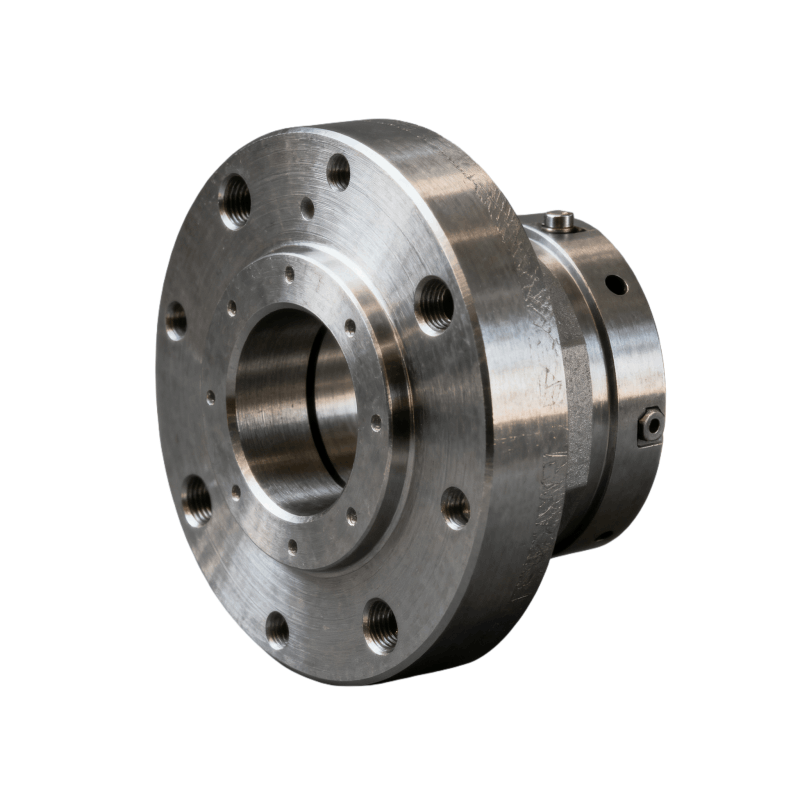
What Are Flanged Bronze Bushings?
Flanged bronze bushings are cylindrical bearing components manufactured from bronze alloys and designed to support shafts or other moving components. The main body provides radial bearing support, while the flange extends outward from one end to provide positioning and additional axial support.
This structure makes a bronze Flange Bushing useful in applications where a conventional cylindrical sleeve bushing cannot provide sufficient axial positioning.
Depending on the application, flanged bronze bushings can be manufactured in different bronze alloys, dimensions, lubrication configurations, and surface finishes. Custom designs can also be produced according to technical drawings and specific operating requirements.
How Do Flanged Bronze Bushings Work?
During operation, the shaft rotates or oscillates inside the bushing. The bronze bearing surface separates the moving shaft from the surrounding housing, reducing direct metal-to-metal contact and helping control friction and wear.
The flange performs an additional function. It can help prevent the bushing from moving axially inside the housing and can provide a surface for limited axial loads. This makes the flanged design particularly useful when both radial support and positioning are required.
Compared with rolling-element bearings, bronze bushings have a relatively simple structure. They contain fewer moving components and can therefore be an attractive solution for machinery operating in environments where simplicity, durability, and easy maintenance are important.
Key Advantages of Flanged Bronze Bushings
1. Good Wear Resistance
Bronze alloys are widely used for bearing applications because they can provide good resistance to wear under suitable operating conditions. This makes them suitable for machinery where repeated sliding or oscillating movement occurs.
2. Reliable Load Support
A properly selected bronze bushing can support substantial radial loads. The flange can also help accommodate certain axial forces and maintain the component's position within the housing.
3. Simple Construction
The simple sleeve-and-flange structure has fewer components than many rolling-element bearing assemblies. This can simplify installation and reduce potential points of failure.
4. Suitable for Various Operating Conditions
Depending on the bronze alloy and lubrication design, flanged bushings can be used in applications involving different loads, speeds, temperatures, and environmental conditions.
5. Customizable Design
Industrial buyers can source custom bronze bushings with different inner diameters, outer diameters, lengths, flange diameters, flange thicknesses, grooves, lubrication holes, and other features.
Common Materials for Flanged Bronze Bushings
The bronze alloy should be selected according to the application's load, speed, lubrication, and environmental requirements. Different bronze materials offer different combinations of strength, wear resistance, corrosion resistance, and machinability.
Common options may include:
Phosphor Bronze: Known for good wear resistance, strength, and fatigue performance.
Aluminum Bronze: Suitable for demanding applications requiring high strength and good corrosion resistance.
Lead-Free Bronze: Used when specific environmental or regulatory requirements need to be considered.
Sintered Bronze: Often used for porous, oil-impregnated bushings that can provide self-lubricating characteristics.
The best material depends on the actual operating conditions rather than simply choosing the strongest alloy. A qualified bronze bushing manufacturer can help evaluate the material based on load, speed, temperature, lubrication, and service environment.
Do Flanged Bronze Bushings Need Lubrication?
Lubrication requirements depend on the specific bushing design and bronze material.
Some bronze bushings are designed to operate with grease or oil lubrication. Others may incorporate oil grooves, lubrication holes, or special materials that reduce the need for frequent maintenance.
Self-lubricating bronze bushings, such as certain oil-impregnated sintered bronze designs, can retain lubricant within the porous structure and gradually release it during operation.
However, self-lubricating does not automatically mean maintenance-free under every operating condition. Temperature, load, speed, contamination, and operating environment should still be considered when determining the appropriate bushing design.
How to Choose the Right Flanged Bronze Bushing Size?
Correct dimensions are essential for achieving reliable bushing performance. When selecting a flanged bronze bushing, buyers should consider more than the shaft diameter.
Important dimensions typically include:
Inside diameter (ID)
Outside diameter (OD)
Bushing length
Flange diameter
Flange thickness
Housing dimensions
Shaft dimensions
Required running clearance
The shaft and bushing must have an appropriate clearance relationship. Excessive clearance may cause vibration, noise, and uneven wear, while insufficient clearance can increase friction and create the risk of seizure, particularly as operating temperature changes.
For custom applications, providing a detailed engineering drawing to the bronze bushing supplier is usually the most effective way to ensure accurate quotation and production.
What Applications Use Flanged Bronze Bushings?
Flanged bronze bushings are used across many industrial sectors where shafts require sliding or oscillating support.
Typical applications include:
Automotive equipment
Construction machinery
Agricultural machinery
Industrial automation equipment
Material handling systems
Hydraulic and pneumatic equipment
Machine tools
Pumps and valves
Conveyors
General mechanical equipment
They are particularly useful where a compact bearing solution must provide both radial support and axial positioning.
Flanged Bronze Bushings vs. Standard Bronze Bushings
The main difference between a flanged bronze bushing and a standard sleeve bushing is the flange.
| Feature | Flanged Bronze Bushing | Standard Bronze Bushing |
|---|---|---|
| Radial Support | Yes | Yes |
| Axial Positioning | Additional support from flange | Limited |
| Installation | Flange helps locate the bushing | Requires separate positioning method |
| Typical Use | Radial load + positioning requirements | Primarily radial support |
If axial positioning is important, the flanged design can simplify the overall mechanical assembly.
What Should Industrial Buyers Consider When Purchasing?
When sourcing flanged bronze bushings, purchasing teams should evaluate both the product and the supplier.
Important factors include:
Material: Confirm the exact bronze alloy and material specification.
Dimensions: Verify ID, OD, length, flange dimensions, and tolerances.
Load and Speed: Provide actual operating conditions to the manufacturer.
Lubrication: Determine whether oil, grease, or self-lubricating designs are appropriate.
Surface Finish: Consider shaft and bushing surface requirements.
Quantity: Confirm prototype, small-batch, or mass-production requirements.
Quality Control: Ask about inspection procedures and dimensional reports.
Customization: Check whether the supplier can manufacture according to drawings.
Lead Time: Confirm sample and production delivery schedules.
A supplier with strong machining capabilities and experience in bronze bearing components can also provide useful recommendations during the design and quotation stage.
Why Choose Custom Flanged Bronze Bushings?
Standard bushings are convenient when the application matches an existing size. However, industrial equipment often has unique shaft dimensions, housing constraints, load requirements, or installation conditions.
Custom flanged bronze bushings allow manufacturers to optimize the component for a specific assembly. Customization may include the bore diameter, outside diameter, overall length, flange geometry, lubrication grooves, oil holes, material grade, surface treatment, and tolerance requirements.
For OEM applications, supplying a detailed drawing or CAD model allows the manufacturer to evaluate the design and recommend suitable production methods before manufacturing begins.
FAQ
1. What is a flanged bronze bushing used for?
It is mainly used to support rotating or oscillating shafts while providing radial bearing support and additional axial positioning through its flange.
2. Are flanged bronze bushings suitable for heavy loads?
They can be suitable for heavy-load applications when the bronze alloy, dimensions, clearance, lubrication, load, and operating speed are properly selected.
3. Do bronze flanged bushings require lubrication?
Some require oil or grease lubrication, while certain sintered or specially designed bronze bushings can provide self-lubricating performance. The correct option depends on the operating conditions.
4. Can flanged bronze bushings be customized?
Yes. Custom bushings can be manufactured according to drawings, including customized dimensions, flange geometry, material, lubrication features, and tolerances.
5. How do I choose the right bronze bushing supplier?
Compare the supplier's material expertise, machining capabilities, dimensional control, quality system, customization capabilities, production capacity, lead time, and experience with similar applications.
Flanged bronze bushings provide a practical solution for mechanical systems that require reliable shaft support, wear resistance, and axial positioning. Their simple structure, material flexibility, and customizable design make them suitable for a wide range of industrial applications.
For industrial buyers, the key to selecting the right bushing is to consider the complete operating environment rather than focusing only on dimensions or price. Material, load, speed, lubrication, clearance, tolerance, and application conditions should all be evaluated together.
Whether you need standard components or custom bronze bushings, working with an experienced bronze bushing manufacturer can help ensure that the final product meets your mechanical and production requirements.