


Cnc Milling services are widely used to manufacture custom metal and plastic components with accurate dimensions, repeatable results, and complex geometries. From prototypes and engineering samples to small-batch and production parts, CNC milling can support a wide range of manufacturing requirements.
Unlike manual machining, CNC milling uses computer-controlled machine tools to control the movement of the cutting tool and workpiece. Based on CAD models, technical drawings, and programmed toolpaths, the machine removes material from a solid workpiece to create the required shape.
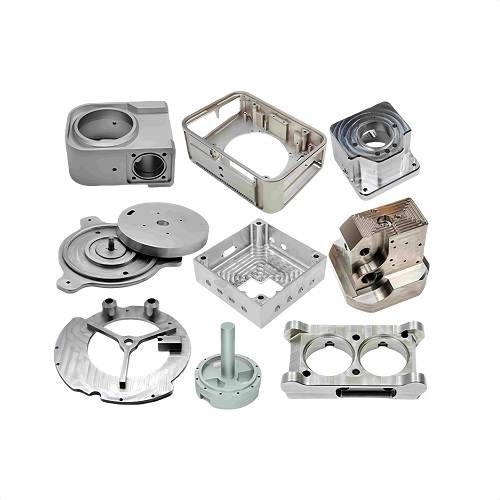
What Is CNC Milling?
CNC milling is a subtractive manufacturing process in which a rotating cutting tool removes material from a workpiece. Depending on the machine configuration, the cutting tool and workpiece can move along multiple axes to produce features such as pockets, slots, holes, contours, steps, and complex surfaces.
The most common CNC milling configurations include 3-axis, 4-axis, and 5-axis machines. The appropriate configuration depends on part geometry, required accessibility, production volume, and machining requirements.
How Does the CNC Milling Process Work?
A typical CNC milling project starts with a 3D CAD model, 2D engineering drawing, or other technical specifications. The manufacturer reviews the design and determines the material, tooling, machining strategy, workholding method, and required finishing processes.
Design preparation: The customer's CAD file or technical drawing is reviewed.
Material selection: The appropriate metal or plastic is selected according to the application's requirements.
CAM programming: Toolpaths are generated based on the part geometry.
Machine setup: The workpiece is securely positioned and the required cutting tools are installed.
Material removal: The CNC machine performs milling, drilling, boring, tapping, and other programmed operations.
Inspection: Critical dimensions and features are checked against the drawing or specifications.
Finishing: Additional processes such as anodizing, plating, polishing, or bead blasting may be applied when required.
3-Axis vs. 4-Axis vs. 5-Axis CNC Milling
The number of machine axes affects how a part can be positioned and machined.
3-Axis CNC Milling
3-axis milling machines move along the X, Y, and Z axes. They are suitable for many standard components, including plates, brackets, housings, fixtures, and parts with accessible features.
4-Axis CNC Milling
4-axis machining adds rotational movement to the basic three linear axes. This allows additional sides or features of a workpiece to be machined without using as many manual repositioning operations.
5-Axis CNC Milling
5-Axis Machining adds two rotational axes to the three linear axes. It can provide better tool access for complex geometries and multi-sided components, reducing the need for multiple setups in suitable applications.
What Materials Can Be CNC Milled?
CNC milling can process a broad range of engineering materials. The material should be selected according to mechanical performance, corrosion resistance, weight, temperature requirements, electrical properties, and the final application.
Aluminum: Lightweight, machinable, and commonly used for housings, brackets, fixtures, and mechanical components.
stainless steel: Suitable for components requiring corrosion resistance and mechanical strength.
Carbon steel: Used for structural and mechanical components where strength and durability are important.
Brass and copper: Useful for applications requiring good machinability or electrical and thermal conductivity.
Titanium: Selected for applications requiring a high strength-to-weight ratio and corrosion resistance.
Engineering plastics: Materials such as ABS, POM, nylon, and other plastics can be machined for functional prototypes and finished components.
What Parts Can Be Made With CNC Milling?
CNC milling is suitable for many types of custom components. Common examples include:
Machine brackets
Aluminum housings
Mechanical fixtures
Jigs and tooling components
Mounting plates
Flanges
Prototype components
Robotics components
Automotive components
Industrial equipment parts
Electronic equipment housings
The final part geometry, tolerance, material, and surface requirements determine which CNC milling strategy and machine configuration should be used.
Why Use CNC Milling Services for Custom Parts?
One of the main advantages of CNC milling is its flexibility. The same basic manufacturing technology can be used for a single prototype, a small production run, or larger quantities of repeat components.
CNC milling can also provide consistent dimensions across repeated parts when the machine setup, tooling, material, and inspection requirements are properly controlled.
Another advantage is design flexibility. CNC milling can produce holes, pockets, slots, threads, contours, and other features that may be difficult to achieve using simpler manufacturing methods.
What Should You Provide When Ordering CNC Milling Services?
Providing complete technical information can help a manufacturer evaluate the project more efficiently. Typical information includes:
3D CAD files
2D engineering drawings
Material requirements
Part dimensions
Critical tolerances
Surface finish requirements
Quantity
Thread specifications
Heat treatment requirements
Surface treatment requirements
Inspection or certification requirements
For custom CNC milling projects, the manufacturer may also review the design for manufacturability. Small changes to wall thickness, tool accessibility, corner radii, hole depth, or part orientation can sometimes simplify machining and improve production efficiency.
CNC Milling for Prototypes and Production
CNC milling is not limited to prototype manufacturing. It can be used throughout the product development cycle, from the first functional prototype to repeat production.
For prototypes, CNC milling allows engineers to evaluate the actual material and physical geometry of a component before moving to another production process. For production parts, CNC machining can provide repeatable manufacturing based on approved drawings, materials, tooling, and inspection requirements.
How to Choose a CNC Milling Service Provider?
When comparing CNC milling suppliers, buyers should look beyond the basic machining process. Important factors include available machine configurations, material capabilities, dimensional accuracy, inspection equipment, surface finishing options, production capacity, engineering support, and experience with similar parts.
For international B2B projects, communication, documentation, packaging, quality control, and delivery capability should also be considered before placing a production order.
Conclusion
CNC milling services provide a flexible manufacturing solution for custom metal and plastic components. By combining computer-controlled machining with different axis configurations, materials, tooling strategies, and finishing processes, CNC milling can support prototypes, custom parts, small batches, and production applications.
Before requesting a quotation, prepare the CAD files, drawings, material requirements, tolerances, surface finish, and quantity. Clear technical information helps the CNC machining supplier select an appropriate manufacturing process and provide a more accurate production plan.